


In the days and weeks leading up to big family gatherings and celebrations, focus naturally shifts to the obvious preparations. Cleaning out the guest room, stocking the refrigerator, and figuring out where everyone will sleep. Holiday electrical system preparation rarely makes the list until something goes wrong, like a tripped breaker during dinner or a bathroom outlet that stops working when three people need to get ready at once.
In South Florida, the holiday season brings its own version of this challenge, with snowbirds returning for warmer weather, families flying into town, and guest rooms and pool houses that sat empty since last year suddenly full again.
A little attention beforehand can prevent those small disruptions from becoming memorable for the wrong reasons.
What follows is a look at the electrical considerations that matter most when your home is about to get busier than usual.
Assess Your Electrical System’s Capacity
Before thinking about individual outlets or rooms, consider the bigger picture. Your home’s electrical system was designed to handle a certain amount of demand, and that design was based on how homes were used at the time it was built.
Holiday gatherings push systems harder than normal daily life, and more people in your home mean simultaneous showers, more hair dryers, more phone chargers, more cooking appliances running at once. It also means your air conditioning is working harder as doors open and close throughout the day. Add extra refrigerators for food storage, pool equipment running longer hours, and possibly an electric vehicle in the driveway, and you’re asking your electrical system to do more than it typically does.
Most of the time, this works fine. But if your home is older, or if you’ve noticed signs of strain during previous high-demand periods, take stock of what your system can realistically handle before the guests arrive.
Checking Your Panels Before Guests Arrive
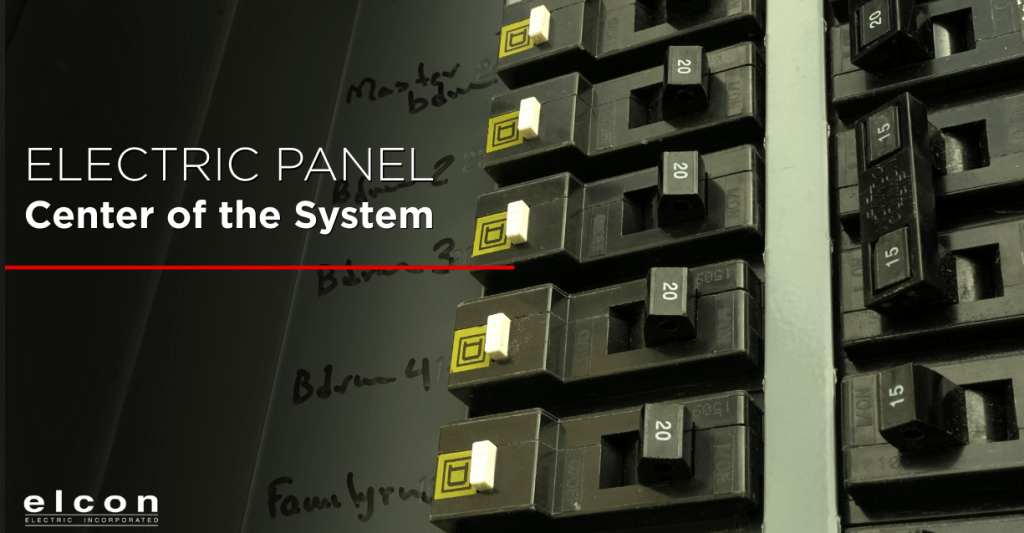
The electrical panel is the heart of your home’s electrical system, and it’s where power enters from the utility to get distributed to individual circuits throughout the house.
Panels are often located in garages, utility rooms, or on exterior walls. The combination of heat and humidity in these locations can affect panel components over time, so condition matters as much as age.
They should be accessible and clearly labeled, with each breaker indicating which area or circuit it controls. If the information is missing, faded, or inaccurate, it makes troubleshooting more difficult when a breaker trips.
Get started by opening the door and looking at the breakers themselves. They should sit firmly in position, either fully on or fully off. If you see that it’s resting in a middle position, or if it feels loose when you touch it, this may mean it’s failing. If you notice scorch marks, discoloration, a burning smell, or corrosion around any breaker, call a licensed electrician.
Next, check for signs of moisture intrusion or rust, particularly in units mounted on exterior walls or in garages without climate control. Humidity is persistent here, and equipment in poorly ventilated spaces develops problems that wouldn’t occur in drier climates.
Note the amperage rating of your main breaker. Most modern homes have 200-amp service, which provides plenty of capacity for typical use. Older homes, particularly those built before 1980, may have 100-amp or even 60-amp service, which can feel limiting when demand increases.
Aging Panels and Known Problem Brands
Electrical systems don’t last forever, and certain older panel types have known reliability or safety concerns.
This region has a significant stock of homes and condominiums built during the construction booms of the 1960s, 1970s, and 1980s. Many still have their original electrical panels.
If your home still has a fuse box, the system is likely 50 years old or more. It isn’t inherently dangerous when properly maintained, but it offers less capacity than modern options and lacks the convenience of resettable breakers, and it can also be difficult to insure.
Certain brands manufactured in the mid-20th century have documented histories of failure, with Federal Pacific Electric (FPE) panels with Stab-Lok breakers and Zinsco panels being the most commonly cited. Both were widely installed locally during peak building years. These breakers may fail to trip during an overload or short circuit, which defeats their primary safety purpose. If your home has either of these panel types, have it evaluated by a professional.
Even reputable manufacturers’ panels have a functional lifespan. A panel that’s 30 or 40 years old may still work, but its breakers can become less reliable over time, and salt air accelerates wear. An inspection can help you understand what you’re working with.
Why Breakers Trip More During the Holidays
Breakers are designed to trip. That’s their job.
When a circuit draws more current than it’s rated for, it cuts power to prevent overheating. An occasional trip during unusual circumstances is normal.
If you’re experiencing frequent tripping, that is different. If the same breaker trips repeatedly, or if you’ve gotten used to resetting them as part of your routine, something is out of balance. Either the circuit is overloaded, or there’s a fault somewhere in the wiring.
The most common culprits are air conditioning and kitchen circuits. Our A/C systems require substantial power, and an aging compressor will typically draw even more as it struggles to perform. Kitchen circuits handle refrigerators, microwaves, coffee makers, toasters, and other high-draw appliances, often running simultaneously during meal preparation.
A 15-amp circuit can safely deliver about 1,800 watts, a 20-amp can handle roughly 2,400 watts, and a single window A/C unit can draw 1,200 watts or more. Add a few other devices to it, and you’ve exceeded the limit.
The solution might be redistributing loads differently, reducing what’s plugged in, or installing a dedicated line to handle the demand. But the first step is understanding why the trips are happening.
If your breakers are tripping without an obvious cause, or you notice any buzzing, heat, or burning smells from the panel, stop using the affected equipment and call an electrician, as these are signs that can indicate loose connections, failing breakers, or wiring problems.
Extension Cords and Power Strips Everywhere
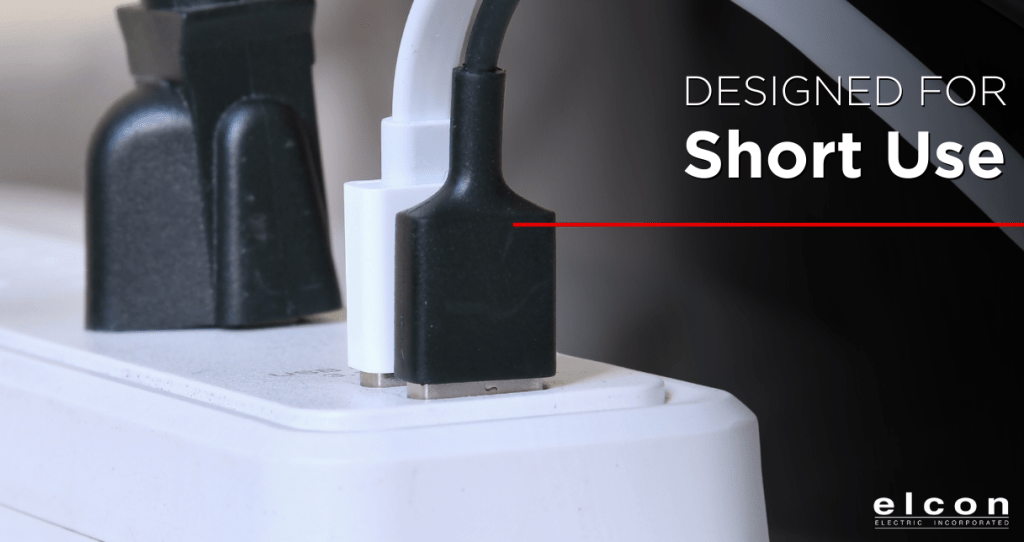
Take a walk through your home and notice how many extension cords and power strips are currently in use. If the number is high, and if many of them have become semi-permanent fixtures, your home may simply not have enough outlets where you need them.
This is common in older homes and condos. Electrical codes have evolved over the decades, and a residence built in 1975 wasn’t designed for the number of devices a household uses today. Bedrooms might have one or two outlets total. Home offices get carved out of spaces that were never intended for them. The kitchen has one outlet when you need four (or more).
While they are very handy and can fill the gap, they’re meant to be temporary. When they become a permanent infrastructure, risks can emerge. Cords running under rugs or through doorways can be damaged without anyone noticing. Strips can be overloaded, especially when multiple high-draw devices share the same strip. Daisy-chaining power strips, plugging one strip into another, compounds the problem by adding resistance at each connection point.
If you know you’ll need to run even more extension cords to accommodate guests, consider whether this is the year to address the underlying shortage. Adding outlets where you need them is straightforward work for a licensed electrician, and it eliminates both the inconvenience and the risk of relying on short-term solutions.
Air Conditioning Under Heavier Load
Your A/C system is likely the single largest electrical load in your home, and during the hosting season, it will work harder than usual. As family and guests arrive, it means more bodies that are generating more heat, doors opening and closing frequently as everyone moves between the pool, interior, or patio. The thermostat may be set lower to keep everyone comfortable, but all of this translates to longer run times and higher electrical demand.
If your system has been struggling or making unusual noises, it is best to address this early and before your guests arrive, as air conditioning that fails during a holiday gathering creates more than discomfort.
Homes with older units may also have undersized electrical service for today’s equipment. Modern high-efficiency systems can require different circuit configurations than the units they replace, and if it was installed decades ago, or if you’re planning an upgrade, confirm that your panel and circuits can support the load.
Pool and Outdoor Equipment
Pools draw more power than many homeowners realize.
Our pool pumps run for hours each day to maintain circulation and filtration. Even for homeowners with variable-speed pumps, which are more efficient than the older single-speed models, they still require dedicated circuits, and heaters, whether gas or electric, add to the demand.
Your underwater lighting, landscape lighting, outdoor speakers, and patio fans all contribute. So be sure to get outside to check your outdoor outlets and equipment connections for any signs of wear, corrosion, or damage. Keep in mind that the combination of pool chemicals, salt air, and humidity deteriorates connections faster than in other environments. This means GFCI protection is required for outlets near pools and should be tested just like bathroom outlets.
If your circuits are tripping here frequently, or if you’ve noticed lights dimming when the pool pump kicks on, this can mean that your circuits may be undersized or the connections may need attention.
Bathroom GFCI Outlets
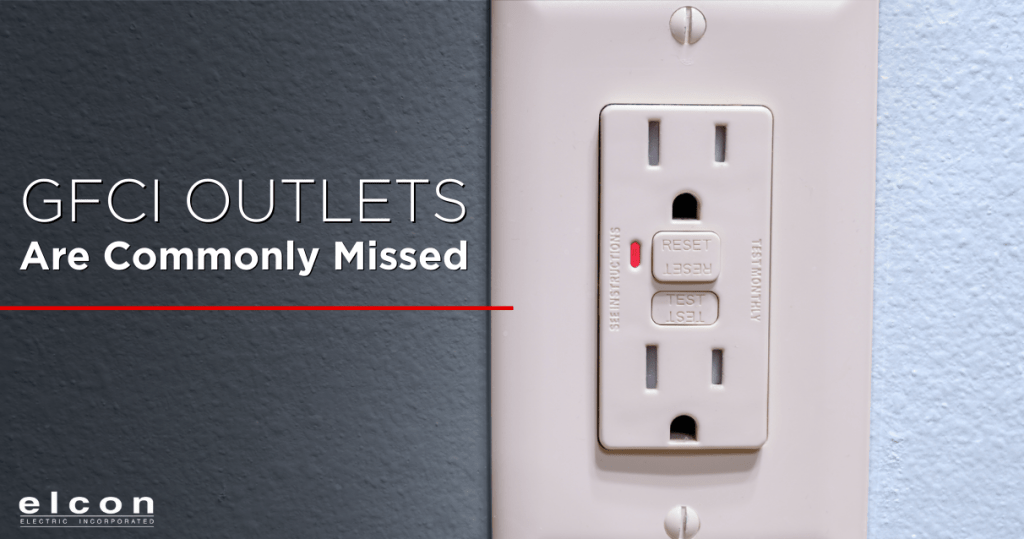
Guest bathrooms are easy to overlook as they often sit unused for weeks or months between visits.
Start with the GFCI outlets, the receptacles with the small “test” and “reset” buttons on their face. These outlets are designed to cut power instantly if they detect a ground fault, which is especially important in wet environments. Press the test button. You should hear a click, and the outlet should lose power. Press reset, and power should return. If nothing happens, or if the outlet won’t reset, replace it before someone plugs in a hair dryer.
They can wear out over time, and if they haven’t been tested in years, they will sometimes fail without any visible indication. The test takes about ten seconds per outlet.
While you’re there, look at the outlets themselves for any potential signs of trouble, including scorch marks, discoloration, or if there’s a burning smell when something is plugged in. If it feels warm to the touch when nothing is plugged in, it also needs attention.
Lighting That Works When You Need It
Holiday gatherings often mean your home is occupied during hours it normally isn’t. Your guests are waking up early, staying up late, moving through hallways and stairwells at unfamiliar times.
To be ready, walk through your home during the evening and note any areas where lighting is inadequate. Note that stairways should be well-lit, and all of your switches should be accessible at both the top and bottom. Hallways between bedrooms and bathrooms benefit from nightlights or motion-activated lighting, especially for guests unfamiliar with the layout.
In homes with older dimmer switches, you may notice buzzing or flickering when LED bulbs are installed. Not all dimmers are compatible with LED technology. Replacing an old dimmer with an LED-compatible version is a relatively simple upgrade.
With the interior of your home covered, it is important to review your outdoor lighting as well. If guests arrive after dark, they will need to be able to see the walkways, steps, and the path to your front door. If the exterior lights have been burned out for months, now is a good time to replace them.
Smoke and Carbon Monoxide Detectors
For many of us, this is generally the least exciting item on the list, but it matters more than the others.
Start by testing every smoke detector and carbon monoxide detector in your home. You do this simply by pressing the test button, and confirming that you hear the alarm sound. For any unit that is chirping or responding weakly, it means the batteries need to be replaced with new ones.
Did you know that smoke detectors should be replaced every ten years and carbon monoxide detectors typically have a lifespan of five to seven years? Check the manufacturing date on each detector. It is important to note that if yours are older than that, they may not function reliably even if they pass a button test.
Yes, this step can take 10 minutes, but for your safety and peace of mind, be sure to take the time to verify.
Electric Vehicle Charging for Visiting Family
EV ownership has grown substantially, and there’s a reasonable chance someone visiting for the holidays will ask about charging.
Most electric vehicles can be charged with a Level 1 charger that plugs into a standard 120-volt household outlet. This works, but it’s slow, typically adding only three to five miles of range per hour—though for a guest staying a few days, that might be enough for local trips. The outlet they use should be in good condition and on a circuit without heavy competing loads. A dedicated garage receptacle is ideal. Running an extension cord across a driveway is not recommended.
If you expect to host EV drivers regularly, a Level 2 charger is a more practical long-term solution. These require a 240-volt circuit and can add 25 to 30 miles of range per hour. Installation requires a licensed electrician to assess your panel capacity and install the appropriate circuit.
For this season, the simple answer is usually to offer a standard outlet in the garage and set realistic expectations about charging speed.
Generator Readiness
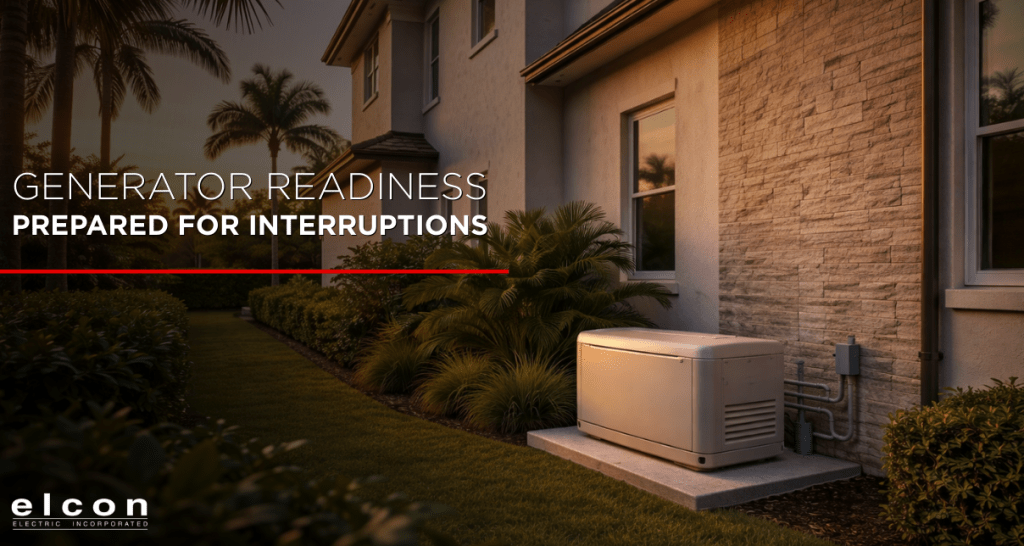
Many homes here have generators, either portable units or whole-home systems installed after a memorable hurricane season. If yours has been sitting unused since the last storm threat, the holidays are a reasonable time to confirm it’s ready.
Run the generator briefly to verify it starts and operates normally. Check fuel levels or propane tank status. For whole-home generators with automatic transfer switches, confirm the system is set to exercise regularly and that no error codes are displayed.
Knowing your backup power situation gives you options if the unexpected happens.
Considerations for Older Condos and Co-ops
Thousands of condominium buildings in the region were constructed during the 1970s and 1980s. Many have common electrical infrastructure approaching or past its expected lifespan.
If you live in an older building, your individual unit’s electrical system is only part of the picture. Building-wide electrical issues can affect your unit even if everything inside your walls is in good condition.
Before hosting season, check with your building management about any known electrical concerns or planned maintenance. If your building has experienced electrical issues in common areas or other units, awareness helps you plan accordingly.
Within your unit, the same principles apply. Test GFCI outlets, check for frequently tripping breakers, and note any outlets or switches that show signs of wear.
A Calm Approach to Preparation

Fortunately, none of this should require any panic or major time-consuming projects. Taking a walk through and around your home with these points in mind should take less than an hour, and most of what you find can be addressed simply.
The goal is to have your home ready to handle the extra people and electrical demands without any surprises. A panel that can handle the load, circuits that don’t trip, A/C systems that keep everyone comfortable are all just the basics, handled well.
If your walk-through reveals anything that concerns you, or if you’d prefer a professional assessment before the busy season, a pre-holiday electrical checkup can address questions and catch issues while there’s still time to resolve them.